Why Pest Issues Keep Returning Root Cause and Structural Risks
- solution-vmpest
- 1 hour ago
- 9 min read
A pest problem that keeps coming back is rarely a random event. In supermarkets, warehouses, loading docks and food manufacturing facilities, recurring activity usually points to a physical pathway, a process failure, or a pattern of behaviour that gives pests what they need.
Treatments can reduce visible activity. They can knock down pressure, interrupt nesting, and support hygiene programs. Yet treatment alone cannot seal a gap under a roller door, repair a damaged threshold, change pallet flow, or stop waste from sitting exposed near an entry point.
That is where root cause assessment becomes essential.
VMPest specialises in identifying why pest issues keep returning. We do not provide treatments. We identify the structural and operational reasons businesses keep needing them, then provide clear corrective actions that support long term prevention.

Recurring pest activity is a symptom, not a mystery
When pest activity returns after service, the common reaction is to question the treatment. Was it strong enough? Was enough product used? Was the service frequent enough?
Those questions may matter, but they are rarely the full answer. Pest activity continues when the site continues to provide one or more of the following:
Entry
Pests can get inside through gaps, cracks, open doors, drains, damaged seals, service penetrations or poorly protected dock areas.
Shelter
Pests can remain hidden in voids, cluttered back-of-house areas, pallet stacks, wall cavities, plant rooms, ceiling spaces or under equipment.
Food and water
Pests can survive on spillage, waste residue, organic build-up, condensation, leaking pipes or poor cleaning access.
Low disturbance
Pests can establish when inspection access is poor, cleaning is inconsistent, or staff processes allow repeat exposure.
If those conditions remain unchanged, the site creates a cycle. Treatment reduces numbers, pest pressure rebuilds, new activity appears, and the process repeats.
Recurrence is often treated as a service issue when it is really a building and process issue.
Structural weak points that allow pest entry
Buildings are rarely sealed as well as they appear. Commercial sites are built for movement, storage, access, ventilation and speed. Those same features can create opportunities for pest ingress.
Across supermarkets, warehouses, food manufacturing sites and distribution centres, VMPest commonly identifies structural risks that allow pests to enter and move through the site.
Gaps in the building envelope
The building envelope includes the walls, roofline, doors, windows, vents, penetrations and junctions that separate inside from outside. Any gap in that envelope can become a pest pathway.
Common examples include:
Cracks along wall and floor junctions
Gaps around service pipes and conduits
Poorly sealed wall penetrations
Damaged cladding joins
Openings around rooflines or eaves
Gaps beneath external doors
Small gaps can be enough. Rodents can exploit surprisingly narrow openings, while insects need even less space. Once a pathway exists, pests may use it repeatedly, especially if it leads to warmth, food odours or shelter.
Damaged seals and thresholds
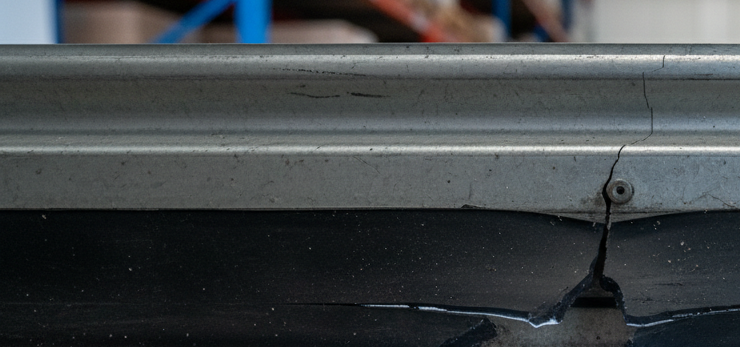
Door seals and thresholds take daily punishment. Trolleys, forklifts, pallet jacks, weather, cleaning equipment and general wear all reduce their effectiveness.
A roller door may look closed but still leave a visible gap at the base or sides. A personnel door may have a damaged brush seal. A cool room threshold may have movement gaps that allow insects to harbour nearby.
These defects are easy to miss during routine operations because staff become used to the condition of the site. An independent inspection often finds that a “closed” door is not actually a sealed door.
Poor airflow control
Air movement can influence pest activity more than many sites realise. Negative air pressure can pull odours, insects and airborne debris towards openings. Warm internal air can escape through gaps and attract pests to entry points. Poorly managed airflow around doors, docks and waste areas can increase risk.
In food sites, airflow issues may also interact with temperature control and condensation. That can create moisture sources or attract insects to certain zones.
Dock leveller voids and loading dock gaps
Loading docks are high-risk areas because they combine frequent movement, open doors, external exposure and product transfer.
Dock levellers can contain voids that shelter rodents or collect debris. Gaps around dock plates, bumpers, roller doors and wall junctions can provide entry routes. The risk increases when doors stay open during loading or when external waste and damaged goods sit nearby.
A treatment program may reduce activity around a dock, but it cannot correct an unsealed void or a door management issue.
Operational behaviours can be the hidden driver
Structure matters, but behaviour often explains why pest problems become cyclical. A well-built site can still experience recurring activity if daily processes create attraction, access or shelter.
Operational drivers are often harder to identify because they sit inside routine work. Staff may follow the same process every day without seeing how it affects pest risk.
Poor stock rotation
Stock that sits too long can create harbourage, spillage risk and inspection blind spots. Older stock may be pushed to the rear of storage areas, where it becomes harder to inspect or clean around.
Poor stock rotation can also hide damaged packaging. A leaking bag, torn carton or sticky residue can support insects and rodents long before activity becomes visible.
A strong rotation process helps reduce pest opportunity. It also makes inspection easier because product movement prevents long-term undisturbed zones.
Inconsistent hygiene routines
Cleaning programs often focus on visible surfaces. Pest risk builds in less obvious places:
Under racking
Behind equipment
Beneath shelving
Around floor drains
In corners behind stock
Along skirting and wall junctions
Inside waste handling areas
A clean-looking site can still contain enough residue to support pest activity. Dry goods dust, sugar residue, oil build-up, organic matter and moisture can all act as attractants.
The issue is usually access, frequency and accountability. If staff cannot reach an area, or if cleaning responsibilities are unclear, risk builds quietly.
Incorrect waste handling
Waste areas are one of the strongest recurring pest drivers. Exposed food waste, unwashed bins, damaged lids, poor drainage and waste stored close to entry points all increase pressure.
The risk rises when waste handling zones sit beside loading docks, staff exits, roller doors or back-of-house access points. Pests attracted to waste do not need to travel far to test a nearby door gap or wall opening.
Good waste control needs more than bin collection. It needs correct placement, sealed lids, cleaning, drainage control and clear staff habits.
High-risk pallet flow
Pallets move risk through a site. They can bring in pests, contaminated material, damaged packaging, soil, moisture or harbourage. Where pallets enter directly from external yards or delivery vehicles into storage or production zones, the pathway becomes harder to control.
High-risk pallet flow may include:
Unchecked inbound pallets
Damaged or dirty pallets
Pallets stored near external openings
Mixed flows between waste, storage and production
Poor separation between clean and exposed areas
A root cause assessment looks at how goods move, not just where pests were seen.
Temperature and humidity fluctuations
Pests respond to environmental conditions. Warmth, condensation and humidity can support insect activity and provide water sources for rodents.
Food manufacturing sites, supermarkets and cool chain environments often contain temperature transitions that create moisture. Door openings, poorly sealed cool rooms, air leaks and washdown processes can all add to the problem.
Recurring activity near drains, cool rooms, plant rooms or wall junctions may point to moisture rather than treatment failure.

Why treatments do not solve structural and process problems
Treatment has a role in pest management, but it cannot replace prevention. When the same issue keeps returning, treatment may only be reducing symptoms.
For example, if rodents are entering through a damaged dock seal, baiting or trapping may reduce the immediate population. Unless the seal is repaired, more rodents can enter later.
If flies are building around exposed waste near a back door, treatment may reduce numbers for a short period. If the waste process stays the same, the attraction remains.
If stored product insects are linked to poor stock rotation, treating affected areas may not stop re-infestation while old stock and residue remain in place.
This is why recurring pest issues require a broader question:
What condition is allowing the pest issue to start, survive and return?
That question changes the focus. Instead of only asking where pests are appearing, the assessment asks why the site keeps supporting them.
What root cause analysis looks for
Root cause analysis connects pest activity to the conditions that make it possible. It is a structured assessment of building defects, site layout, staff process, product flow and environmental conditions.
VMPest assessments focus on four practical questions.
Why are pests entering?
This stage identifies the likely entry pathways. It may include external perimeter checks, door audits, waste area reviews, dock inspections, drainage observations, service penetration checks and building envelope assessment.
The goal is to separate possible entry points from probable entry points. A site may have many defects, but some carry more risk because of nearby food sources, odours, shelter or access patterns.
Why are they staying?
Entry alone does not always explain recurrence. Pests remain where they can find shelter, food, water and low disturbance.
This part of the assessment reviews internal conditions such as housekeeping, racking, voids, floor-wall junctions, clutter, stock handling, equipment placement and cleaning access.
It also looks at whether the site design makes monitoring and inspection difficult. Hidden spaces allow pests to remain unnoticed for longer.
Why are they recurring?
Recurring activity often follows a pattern. It may appear after deliveries, during warmer weather, after washdown, during waste overflow, or when certain doors remain open.
Identifying the pattern helps link pest activity to operations. This can reveal process changes that reduce risk without relying only on more frequent treatment.
Why are treatments not solving the problem?
When treatment results do not last, the assessment reviews what the treatment is being asked to overcome.
If the program keeps addressing the pest but not the cause, recurrence is likely. The issue may be structural repair, behaviour change, improved exclusion, better cleaning access, revised waste handling or clearer staff training.
This is not a criticism of treatment providers. It is recognition that treatment works best when the site conditions support prevention.
Common risk findings in commercial sites
Every site is different, but recurring pest assessments often find a combination of physical and operational risks.
Risk area | What it can cause | Typical corrective action |
Roller door gaps | Rodent and insect entry | Repair seals, adjust thresholds, improve door closure habits |
Dock leveller voids | Harbourage and repeat ingress | Inspect voids, clean debris, seal gaps where suitable |
Exposed waste zones | Attraction near entry points | Improve bin sealing, cleaning, placement and collection routines |
Poor stock rotation | Hidden spillage and pests in old stock | Introduce clear rotation and damaged stock checks |
Unsealed penetrations | Movement through walls and service areas | Seal around pipes, conduits and wall openings |
Poor back-of-house layout | Cleaning blind spots and clutter | Rework storage layout and improve inspection access |
Inadequate staff training | Repeat behaviours that increase risk | Train staff on door control, waste, spills and reporting |
The value of this work is clarity. Instead of another list of pest sightings, the business gets a ranked view of the conditions causing the problem.
Structural risk needs practical prioritisation
Most commercial sites have more defects than they can fix at once. A useful assessment does not simply list every gap, crack or process issue. It prioritises risk based on likelihood and impact.
A high-priority structural issue usually has several features:
It connects directly to an internal food, waste or storage zone
It sits near repeated pest activity
It shows signs of wear, damage or frequent use
It remains open for long periods
It links to a staff process that repeats every day
A small door gap beside an active waste area may carry more risk than a larger defect in a low-use, low-attraction area. Context matters.
Good prevention starts with targeted repairs and process changes that reduce the most likely pathways first.

Prevention improves when structure and behaviour align
Pest prevention works best when the building, process and people all support the same outcome.
That means doors close properly and staff understand why they must stay closed. Waste areas stay sealed and sit away from vulnerable entries where possible. Stock rotates in a way that prevents hidden harbourage. Cleaning routines include hard-to-reach spaces, not just visible surfaces. Building defects are reported, prioritised and repaired before they become pest pathways.
For many sites, the biggest improvement comes from making pest risk visible. Staff often respond well when they can see the connection between a behaviour and an outcome. Leaving a roller door open is no longer just a convenience issue. It becomes a known ingress risk. Storing damaged stock against a wall is no longer just untidy. It becomes a harbourage and inspection issue.
This is where VMPest adds value. Our role is to identify the drivers behind repeat activity and turn them into clear prevention steps. We assess the root causes, explain the risk, and provide corrective actions that can reduce reliance on reactive service models.
The real reason pest issues keep returning
Recurring pest issues usually continue because the site still offers access, shelter, food, water or low disturbance. Treatments can reduce activity, but they cannot repair the conditions that allow pests to return.
The real work starts when a business asks better questions.
Where are pests getting in? What is attracting them? Where can they hide? Which daily processes keep recreating the risk? Which building defects matter most?
When those answers are clear, prevention becomes practical. Repairs can be prioritised. Staff behaviours can change. Waste, stock, cleaning and door management can improve. Treatment providers can work in conditions that support better results.
Persistent pest activity is a signal. Read it correctly, and it points directly to the structural and operational changes that matter most.

Comments